Logo

BTSG

BrightSpring Health Services, Inc. Common Stock

BTSG

BrightSpring Health Services, Inc. Common Stock NASDAQ
$36.16 -0.88% (-0.32)

Market Cap $6.52 B
52w High $36.77
52w Low $15.26
Dividend Yield 0%
P/E 66.96
Volume 935.15K
Outstanding Shares 180.35M

Income Statement

Period Revenue Operating Expense Net Income Net Profit Margin Earnings Per Share EBITDA
Q3-2025 $3.334B $304.165M $55.836M 1.675% $0.19 $128.596M
Q2-2025 $3.148B $326.295M $28.208M 0.896% $0.14 $90.396M
Q1-2025 $2.878B $287.63M $29.542M 1.026% $0.15 $92.9M
Q4-2024 $3.053B $342.846M $15.999M 0.524% $0.08 $133.934M
Q3-2024 $2.907B $351.272M $-8.23M -0.283% $-0.042 $107.448M

Balance Statement

Period Cash & Short-term Total Assets Total Liabilities Total Equity
Q3-2025 $140.344M $6.049B $4.228B $1.819B
Q2-2025 $70.07M $5.944B $4.198B $1.743B
Q1-2025 $52.337M $5.847B $4.156B $1.687B
Q4-2024 $61.253M $5.926B $4.275B $1.648B
Q3-2024 $35.973M $5.786B $4.167B $1.615B

Cash Flow Statement

Period Net Income Cash From Operations Cash From Investing Cash From Financing Net Change Free Cash Flow
Q3-2025 $38.083M $107.936M $-23.761M $-13.107M $70.274M $92.174M
Q2-2025 $27.542M $49.076M $-23.243M $-8.243M $17.59M $24.651M
Q1-2025 $29.01M $101.598M $-24.191M $-86.018M $-8.611M $83.966M
Q4-2024 $15.404M $90.612M $-15.78M $-49.552M $25.28M $75.301M
Q3-2024 $-8.981M $27.246M $-35.827M $19.527M $10.946M $7.203M

Revenue by Products

Product Q3-2024Q4-2024Q2-2025Q3-2025
Commercial Insurance
$670.00M $720.00M $790.00M $870.00M
Medicaid
Medicaid
$560.00M $580.00M $350.00M $420.00M

Five-Year Company Overview

Income Statement

Income Statement Revenue has been climbing at a healthy pace for several years, showing that the business is successfully expanding its services and reach. Gross profits are also trending up, which suggests the core services are adding value and the company is maintaining a reasonable spread between what it earns and what it costs to deliver care. Operating profits are positive but relatively thin, which is common in complex healthcare services. This points to a business that is working, but does not have a lot of cushion if costs rise or reimbursement rates tighten. Earnings at the bottom line have been volatile, swinging between small profits and losses, which reflects ongoing restructuring, financing costs, and the costs of growth. Overall, the income statement tells the story of a growing platform with improving scale, but still working to convert that growth into consistently solid, net profitability.


Balance Sheet

Balance Sheet The balance sheet shows a sizable asset base that has been fairly stable, with gradual growth as the company has expanded. Equity has strengthened recently, which is a positive sign and suggests the company has been able to rebuild its capital base after earlier pressure. Debt remains high relative to the size of the business, even though it has started to come down. This level of leverage adds financial risk and makes the company sensitive to interest costs and refinancing conditions. Cash balances are quite lean, which means liquidity management and access to credit lines are important. In short, the company carries a meaningful debt load on top of a solid asset base, and while its capital position is improving, leverage and liquidity remain key watch-points.


Cash Flow

Cash Flow Cash generation from day‑to‑day operations has been uneven, with some years of solid inflows and others where cash from operations was minimal. This inconsistency reflects both the complexity of the business and the impact of working capital swings and integration or growth initiatives. Free cash flow has occasionally dipped into negative territory, particularly when investment spending outweighed operating inflows. Capital spending itself appears moderate and relatively steady, geared toward maintaining and gradually upgrading the platform rather than heavy, one‑time buildouts. Taken together, the cash flow profile suggests a business that can generate cash but not yet in a consistently strong or predictable way, which matters for funding growth, servicing debt, and building a larger cash buffer over time.


Competitive Edge

Competitive Edge BrightSpring operates in a specialized niche at the intersection of home and community‑based care, complex patient management, and integrated pharmacy services. This focus on high‑need, complex populations creates natural barriers to entry because it requires deep clinical expertise, strong regulatory know‑how, and long‑standing payer and referral relationships. Its integrated model—combining pharmacy services, home‑based care, behavioral health, and other support under one umbrella—is a key differentiator. This structure can improve adherence, reduce hospitalizations, and lower total costs for payers, which is exactly what value‑based healthcare models seek. The company’s national footprint adds scale advantages in contracting, purchasing, and data collection. However, it still faces intense competition from regional providers, health systems, and large pharmacy players, and it operates in a heavily regulated, reimbursement‑driven environment, which can change the economics quickly.


Innovation and R&D

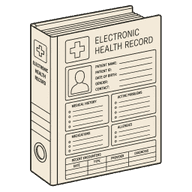
Innovation and R&D Innovation at BrightSpring is more about service design and technology integration than traditional lab‑style R&D. The “Connected Home” model—combining electronic health records, telehealth, remote monitoring, and integrated pharmacy and provider services—aims to create a seamless, home‑centered care environment. The company leans heavily on data analytics to coordinate care, tailor interventions, and measure outcomes, which is essential for value‑based contracts. Its integrated pharmacy platform is a core innovation, giving it an edge in medication management for patients with complex, multi‑drug regimens. Looking ahead, expansion of home‑based primary care, deeper value‑based care contracts, and continued bolt‑on acquisitions are central to its innovation roadmap. These initiatives could strengthen margins and deepen its moat, but they also introduce execution risk and depend on successful technology adoption and payer alignment.


Summary

BrightSpring is a fast‑growing healthcare services platform with a strong focus on complex patients and home‑based care. The income statement reflects solid top‑line growth and improving operating performance, but with thin margins and uneven net earnings, indicating that the company is still in a build‑and‑optimize phase. The balance sheet shows a substantial, stable asset base and recovering equity, but also a heavy reliance on debt and limited cash on hand, which heighten financial risk and make consistent cash generation especially important. Cash flows have been patchy, with some years of healthy free cash and others where investments and working capital needs have weighed on liquidity. Competitively, the integrated care and pharmacy model, national footprint, and specialization in complex populations give BrightSpring a meaningful strategic position in a growing part of healthcare. Its innovation efforts in connected home care, data‑driven management, and value‑based contracts could deepen that edge if executed well. Overall, BrightSpring looks like an expanding, innovation‑driven healthcare platform with clear strategic strengths but also notable financial and execution risks, particularly around leverage, cash consistency, and the challenge of turning rapid growth into durable, high‑quality earnings.