 Stock Taper
FDX
$330.88
▼ DOWN 0.16% (-0.53)
KEY STATISTICS
Market Cap$78.28 B
52w High$345.37
52w Low$178.33
Dividend Yield1.47%
FrequencyQuarterly
P/E16.37
Volume956.86K
Shares Out.236.58M
COMPANY
LEADERSHIP

CHIEF EXECUTIVE
Rajesh Subramaniam
COMPENSATION 2026
Salary$1,550,000
Stock Awards$6,731,364
Incentive Plan Pay$10,593,500
All Other Comp.$2,548,066
Total$27,554,018
ABOUT
SECTOR
Industrials
WENT PUBLIC
April 12, 1978
METHOD OF GOING PUBLIC
IPO
FULL TIME EMPLOYEES
530,000
PRICE TARGET
Target High$425.00
Target Low$160.00
Target Median$340.00
Target Consensus$316.64
UPCOMING EARNINGS
DateSep 17, 2026
DayThursday
Rev. Est.$23.21B
SEP
17
THU
SPLIT RECORD
| DATE | TYPE | RATIO |
|---|---|---|
| 2026-06-01 | Forward | 1241:1000 |
| 1999-05-07 | Forward | 2:1 |
| 1996-11-05 | Forward | 2:1 |
| 1983-11-01 | Forward | 2:1 |
| 1980-11-03 | Forward | 2:1 |
| 1978-09-26 | Forward | 2:1 |
PRICE
$330.88 ▼ DOWN 0.16% (−$0.53)About FedEx Corporation
https://www.fedex.com ↗FedEx Corporation offers global transportation, e-commerce, and business services through segments like Express, Ground, Freight, and Services, providing package delivery, freight, supply chain solutions, and support worldwide.
INDUSTRY
Integrated Freight & Logistics
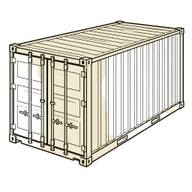
A SERVICE FEDEX CORPORATION IS KNOWN FOR
FedEx Express
FedEx Express, the company's flagship international, time-definite shipping service, is the world's largest express carrier, renowned for fast, reliable delivery to over 220 countries and territories.


Revenue by Products
| Icon | PRODUCT | Q1-2026 | Q2-2026 | Q3-2026 | Q4-2026 |
|---|---|---|---|---|---|
 | Federal Express Segment | $5.97B | $6.45B ▲ | $6.26B ▼ | $6.8B ▲ |
 | Corporate Reconciling Items And Eliminations | $871M | $897M ▲ | $855M ▼ | $1.03B ▲ |
 | Other International Revenue | $240M | $240M | $235M ▼ | $338M ▲ |
 | Fedex Freight Segment | $62M | $60M ▼ | $55M ▼ | $66M ▲ |
Revenue by Geography
| Map | REGION | Q1-2026 | Q2-2026 | Q3-2026 | Q4-2026 |
|---|---|---|---|---|---|
 | UNITED STATES | $15.97B | $16.72B ▲ | $17.45B ▲ | $17.8B ▲ |
 | NonUS | $6.27B | $6.75B ▲ | $6.55B ▼ | $7.2B ▲ |
ETFS HOLDING THIS STOCK
ETFS HOLDING
879
LISTED HERE
26
RANKED BY POSITION SIZE


INSTITUTIONAL OWNERSHIP
SHARES OWNED
53.87%
HOLDERS
2,800
TOP 12 OF 2,800 · RANKED BY POSITION SIZE

Vanguard Group Inc

Blackrock, Inc.

Dodge & Cox

Blackrock Inc.

State Street Corp

Primecap Management Co/Ca/

Blackrock Institutional Trust Company, N.A.

Fmr LLC

Franklin Resources Inc

Geode Capital Management, LLC

Capital International Investors

Blackrock Fund Advisors
RATINGS SNAPSHOT
Overall rating: B
Discounted Cash Flow3
Return On Equity4
Return On Assets3
Debt To Equity1
Price To Earnings3
Price To Book2
Overall Score3
TRADES BY CONGRESS
HOUSE TRADES

Ro Khanna
Sale
2026-07-07

Maria Elvira Salazar
Purchase
2026-03-25

Gilbert Cisneros
Purchase
2026-01-09

Valerie Hoyle
Sale (Full)
2025-09-23
INSIDER TRADES
★
OFFICER: EVP CDIO & PRESIDENT FDW
Talwar Vishal
Purchase · 1.5K shares
2026-08-17
★
DIRECTOR, OFFICER: COO INTL - CEO AIRLINE FEC
Smith Richard W
Sale · 253.9K shares
2026-08-07
★
OFFICER: EVP CDIO & PRESIDENT FDW
Talwar Vishal
Purchase · 3.5K shares
2026-06-25
★
DIRECTOR, OFFICER: PRESIDENT/CEO
Subramaniam Rajesh
Purchase · 10.7K shares
2026-06-25
MOST RECENT ANALYST GRADES
GRADE SUMMARY
BUY 8
OVERWEIGHT 4
MARKET PERFORM 2
UNDERWEIGHT 1
IN LINE 1
POSITIVE 1
NEUTRAL 1
18 GRADES IN THE LAST 12 MONTHS


SECTORS PEERS
| PEER | PRICE | |
|---|---|---|
 CSX CSX | $51.28 | COMPARE |
 UPS UPS | $105.32 | COMPARE |
 CP CP | $94.12 | COMPARE |
 NSC NSC | $348.68 | COMPARE |
 CMI CMI | $564.85 | COMPARE |
 CNI CNI | $126.01 | COMPARE |
 RSG RSG | $222.11 | COMPARE |
 PCAR PCAR | $125.34 | COMPARE |