 Stock Taper
FNB
$18.41
▼ DOWN 0.43% (-0.08)
KEY STATISTICS
Market Cap$6.55 B
52w High$19.59
52w Low$14.46
Dividend Yield2.65%
FrequencyQuarterly
P/E11.16
Volume3.23M
Shares Out.355.96M
COMPANY
LEADERSHIP

CHIEF EXECUTIVE
Vincent J. Delie Jr.
COMPENSATION 2026
Salary$1,222,893
Stock Awards$3,843,347
Incentive Plan Pay$2,876,400
All Other Comp.$529,987
Total$8,472,627
ABOUT
SECTOR
Financial Services
WENT PUBLIC
September 2, 1986
METHOD OF GOING PUBLIC
IPO
FULL TIME EMPLOYEES
4,205
PRICE TARGET
Target High$22.00
Target Low$19.00
Target Median$21.50
Target Consensus$21.00
UPCOMING EARNINGS
DateOct 15, 2026
DayThursday
Rev. Est.$475.74M
OCT
15
THU
SPLIT RECORD
| DATE | TYPE | RATIO |
|---|---|---|
| 2003-05-13 | Forward | 21:20 |
| 2002-05-15 | Forward | 21:20 |
| 2001-05-01 | Forward | 21:20 |
| 2000-04-26 | Forward | 21:20 |
| 1999-05-04 | Forward | 21:20 |
| 1998-04-16 | Forward | 21:20 |
| 1997-04-29 | Forward | 21:20 |
| 1996-04-29 | Forward | 21:20 |
| 1995-05-04 | Forward | 21:20 |
| 1994-05-04 | Forward | 21:20 |
PRICE
$18.41 ▼ DOWN 0.43% (−$0.08)About F.N.B. Corporation
https://www.fnb-online.com ↗F.N.B. Corporation is a Pittsburgh-based financial holding company offering banking, wealth management, and insurance services to consumers, businesses, and governments across multiple states through 334 offices.
INDUSTRY
Banks - Regional
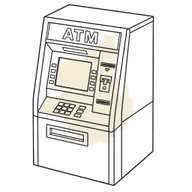
A SERVICE F.N.B. CORPORATION IS KNOWN FOR
eStore® Digital Banking Platform
The eStore® is F.N.B. Corporation’s flagship digital platform enabling customers to shop, apply for, and manage financial products online or via mobile, integrating digital and branch banking for a seamless experience.


ETFS HOLDING THIS STOCK
ETFS HOLDING
218
LISTED HERE
26
RANKED BY POSITION SIZE


INSTITUTIONAL OWNERSHIP
SHARES OWNED
77.34%
HOLDERS
759
TOP 12 OF 759 · RANKED BY POSITION SIZE

Blackrock, Inc.

Blackrock Inc.

Vanguard Group Inc

Fmr LLC

Fuller & Thaler Asset Management, Inc.

Dimensional Fund Advisors LP

State Street Corp

Blackrock Fund Advisors

First Trust Advisors LP

Aqr Capital Management LLC

American Century Companies Inc

Two Sigma Investments, LP
RATINGS SNAPSHOT
Overall rating: B+
Discounted Cash Flow4
Return On Equity3
Return On Assets3
Debt To Equity2
Price To Earnings3
Price To Book3
Overall Score3
TRADES BY CONGRESS
HOUSE TRADES

Lisa McClain
Sale (Full)
2025-06-11

Chris Jacobs
Purchase
2022-06-21

Donna Shalala
Sale (Full)
2019-05-15
INSIDER TRADES
★
OFFICER: CHIEF WHOLESALE BANKING OFFICE
David Bryant Mitchell
Sale · 4.1K shares
2026-08-06
★
OFFICER: CHIEF CREDIT OFFICER
GUERRIERI GARY L
Sale · 19.0K shares
2026-06-12
★
DIRECTOR
Mencini Frank C
Sale · 200 shares
2026-05-06
★
DIRECTOR
CHIAFULLO JAMES D
Purchase · 5.0K shares
2026-05-06
MOST RECENT ANALYST GRADES
GRADE SUMMARY
OVERWEIGHT 2
NEUTRAL 1
BUY 1
OUTPERFORM 1
5 GRADES IN THE LAST 12 MONTHS


SECTORS PEERS
| PEER | PRICE | |
|---|---|---|
 PB PB | $72.30 | COMPARE |
 COLB COLB | $30.07 | COMPARE |
 VLY VLY | $13.92 | COMPARE |
 UBSI UBSI | $47.60 | COMPARE |
 GBCI GBCI | $46.88 | COMPARE |
 HWC HWC | $75.07 | COMPARE |
 HOMB HOMB | $29.62 | COMPARE |
 ABCB ABCB | $85.59 | COMPARE |