 Stock Taper
FTNT
$161.85
▼ DOWN 5.31% (-9.08)
KEY STATISTICS
Market Cap$118.67 B
52w High$173.89
52w Low$73.55
Dividend Yield—
Frequency—
P/E53.77
Volume5.36M
Shares Out.733.71M
COMPANY
LEADERSHIP

CHIEF EXECUTIVE
Ken Xie
COMPENSATION 2026
Salary$597,000
Stock Awards$10,155,102
Incentive Plan Pay$705,937
All Other Comp.$0
Total$11,458,039
ABOUT
SECTOR
Technology
WENT PUBLIC
November 18, 2009
METHOD OF GOING PUBLIC
IPO
FULL TIME EMPLOYEES
15,472
PRICE TARGET
Target High$203.00
Target Low$100.00
Target Median$165.00
Target Consensus$159.39
UPCOMING EARNINGS
DateNov 4, 2026
DayWednesday
Rev. Est.$2.06B
NOV
4
WED
SPLIT RECORD
| DATE | TYPE | RATIO |
|---|---|---|
| 2022-06-23 | Forward | 5:1 |
| 2011-06-02 | Forward | 2:1 |
PRICE
$161.85 ▼ DOWN 5.31% (−$9.08)About Fortinet, Inc.
https://www.fortinet.com ↗Fortinet, Inc. offers integrated, automated cybersecurity solutions—including firewalls, endpoint protection, and secure networking—for diverse industries worldwide, supported by services and strategic alliances.
INDUSTRY
Software - Infrastructure
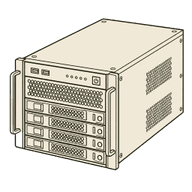
A PRODUCT FORTINET, INC. IS KNOWN FOR

FortiGate 70G Series Next-Generation Firewall
The FortiGate 70G series offers AI-powered, high-performance next-generation firewalls designed to deliver real-time threat detection and automated response for distributed enterprise cybersecurity.


Revenue by Products
| Icon | PRODUCT | Q3-2025 | Q4-2025 | Q1-2026 | Q2-2026 |
|---|---|---|---|---|---|
 | Product | $559.3M | $691.1M ▲ | $645.1M ▼ | $773M ▲ |
 | Security Subscription | $672M | $693.7M ▲ | $694M ▲ | $729.7M ▲ |
 | Technical Support and Other | $493.6M | $520.2M ▲ | $510.5M ▼ | $545.2M ▲ |
Revenue by Geography
| Map | REGION | Q3-2025 | Q4-2025 | Q1-2026 | Q2-2026 |
|---|---|---|---|---|---|
 | Europe Middle East and Africa | $713.7M | $825.1M ▲ | $784.8M ▼ | $871.7M ▲ |
 | Americas | $680.5M | $731.3M ▲ | $739.8M ▲ | $808.2M ▲ |
 | AsiaPacific and Japan | $330.7M | $348.6M ▲ | $325M ▼ | $368M ▲ |
ETFS HOLDING THIS STOCK
ETFS HOLDING
1,201
LISTED HERE
26
RANKED BY POSITION SIZE


INSTITUTIONAL OWNERSHIP
SHARES OWNED
45.82%
HOLDERS
2,047
TOP 12 OF 2,047 · RANKED BY POSITION SIZE

Vanguard Group Inc

Blackrock, Inc.

Blackrock Inc.

State Street Corp

Invesco Ltd.

Geode Capital Management, LLC

Norges Bank

Bank Of New York Mellon Corp

First Trust Advisors LP

Morgan Stanley

Arrowstreet Capital, Limited Partnership

Goldman Sachs Group Inc
RATINGS SNAPSHOT
Overall rating: B
Discounted Cash Flow3
Return On Equity5
Return On Assets5
Debt To Equity2
Price To Earnings1
Price To Book1
Overall Score3
TRADES BY CONGRESS
HOUSE TRADES

Dan Newhouse
Sale
2026-07-10

Ro Khanna
Purchase
2026-07-07

Gilbert Cisneros
Sale
2026-04-14

Tony Wied
Sale
2026-02-19
INSIDER TRADES
★
DIRECTOR
Kan Derek T.
Purchase · 1.8K shares
2026-08-12
★
DIRECTOR
Sim Judith
Purchase · 1.8K shares
2026-08-12
★
DIRECTOR
GOLDMAN KENNETH A
Purchase · 1.8K shares
2026-08-12
★
DIRECTOR
Hsieh Ming
Purchase · 1.8K shares
2026-08-12
MOST RECENT ANALYST GRADES
GRADE SUMMARY
NEUTRAL 6
BUY 5
HOLD 3
EQUAL WEIGHT 3
SECTOR PERFORM 2
UNDERWEIGHT 2
IN LINE 1
UNDERPERFORM 1
REDUCE 1
MARKET PERFORM 1
OUTPERFORM 1
MIXED 1
27 GRADES IN THE LAST 12 MONTHS


SECTORS PEERS
| PEER | PRICE | |
|---|---|---|
 STX STX | $816.50 | COMPARE |
 MSI MSI | $494.22 | COMPARE |
 SNPS SNPS | $418.94 | COMPARE |
 TEL TEL | $203.41 | COMPARE |
 ADSK ADSK | $249.14 | COMPARE |
 WDAY WDAY | $197.78 | COMPARE |
 INFY INFY | $12.00 | COMPARE |
 XYZ XYZ | $78.91 | COMPARE |