 Stock Taper
NCT
$4.87
▲ UP 4.28% (0.20)
KEY STATISTICS
Market Cap$5.14 M
52w High$47.50
52w Low$1.30
Dividend Yield0.28%
FrequencyQuarterly
P/E-1.96
Volume902.02K
Shares Out.1.05M
COMPANY
LEADERSHIP

CHIEF EXECUTIVE
Muchun Zhu
ABOUT
SECTOR
Industrials
WENT PUBLIC
March 28, 2025
METHOD OF GOING PUBLIC
N/A
FULL TIME EMPLOYEES
24
SPLIT RECORD
| DATE | TYPE | RATIO |
|---|---|---|
| 2026-04-02 | Reverse | 1:25 |
PRICE
$4.87 ▲ UP 4.28% (+$0.20)About Intercont (Cayman) Limited Ordinary shares
https://www.intercontcayman.com ↗Intercont is a global maritime shipping company offering time chartering and vessel management, with a fleet of four vessels totaling 217,191 dwt, and plans to expand into seaborne pulping via its Singapore subsidiary, Openwindow, in early 2025.
INDUSTRY
Marine Shipping
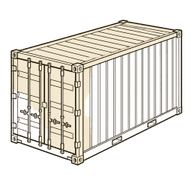
A SERVICE INTERCONT (CAYMAN) LIMITED ORDINARY SHARES IS KNOWN FOR
Global Maritime Transportation and Seaborne Pulping Services
Intercont (Cayman) Limited is a global shipping company specializing in maritime transportation and vessel management, with a focus on innovative, eco-friendly seaborne pulping operations utilizing transit time for pulp production.


ETFS HOLDING THIS STOCK
ETFS HOLDING
1
LISTED HERE
1
RANKED BY POSITION SIZE

RATINGS SNAPSHOT
Overall rating: B-
Discounted Cash Flow5
Return On Equity1
Return On Assets1
Debt To Equity2
Price To Earnings1
Price To Book5
Overall Score3
INSIDER TRADES
★
DIRECTOR
WONG KHAI MENG
— · —
2026-08-05
★
DIRECTOR
LEE CHEE WAI
— · —
2026-08-05
★
DIRECTOR
CHAN KELVIN ZHI HONG
— · —
2026-08-05
★
DIRECTOR, OFFICER: CHIEF FINANCIAL OFFICER
Wang QingYuan
— · —
2025-03-27
SECTORS PEERS
| PEER | PRICE | |
|---|---|---|
 SIDU SIDU | $2.21 | COMPARE |
 GLBS GLBS | $3.54 | COMPARE |
 PXS PXS | $5.36 | COMPARE |
 XTIA XTIA | $1.35 | COMPARE |
 CTRM CTRM | $2.34 | COMPARE |
 PRZO PRZO | $0.84 | COMPARE |
 PSHG PSHG | $1.68 | COMPARE |
 NIXX NIXX | $0.64 | COMPARE |