
Tesla’s Moat: What’s Real, and What Isn’t?
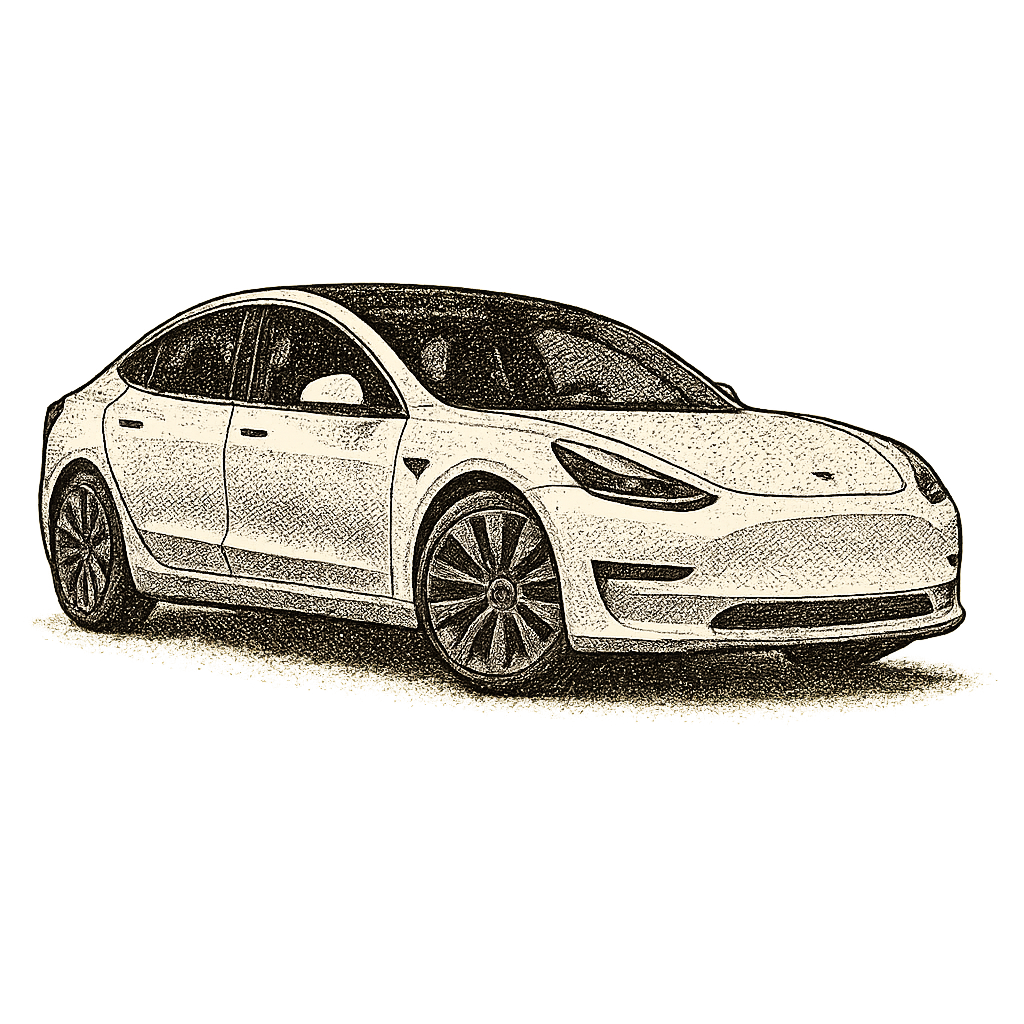
Few companies spark stronger reactions than Tesla. Some investors treat it like a technology miracle poised to dominate global transportation. Others see an overhyped automaker with shrinking margins and rising competition. The truth sits somewhere in between.
Tesla does have competitive advantages — real ones. But it also has weaknesses that rarely show up in optimistic narratives. Understanding which advantages are durable and which are overstated is essential for long-term investors trying to evaluate the company’s true position.
Here’s a clear breakdown of Tesla’s moat: what’s real, what’s misunderstood, and what might fade over time.
The Real Moats Tesla Actually Has
1. Manufacturing Scale and Efficiency
Tesla builds EVs at a scale few companies — even giants like GM or Volkswagen — have been able to match efficiently.
Its structural advantages include:
- Massive Gigafactory capacity
- Vertical integration
- Streamlined vehicle designs
- Simplified parts architecture
- Software-driven manufacturing processes
Tesla produces EVs with fewer parts and lower labor-hours per vehicle. Even if rivals catch up technologically, the manufacturing gap remains significant.
This is a real moat — but not an unbreakable one.
2. The Supercharger Network (Still the Strongest Moat Today)
If Tesla has one unmistakable advantage, it’s charging.
- Tens of thousands of high-speed chargers
- High reliability compared to competitors
- Prime locations
- A decade-long head start
- Open access agreements with legacy automakers
Charging is the Achilles heel of EV adoption. Tesla solved it before anyone else, and the industry has been playing catch-up ever since. Even as other companies adopt Tesla’s NACS plug standard, the network advantage is still meaningful.
This moat is real, valuable, and still widening.
3. Software Integration and Over-the-Air Updates
Tesla treats its cars like hardware running software — which means the car gets better over time. OTA updates improve:
- Range
- Efficiency
- Battery management
- Safety features
- Infotainment
- Autopilot behavior
Other automakers are attempting this, but the cultural and engineering shift is slow. Tesla’s full-stack integration is years ahead.
Real moat — but one that competitors could eventually close.
4. Brand Power and Consumer Perception
Tesla has the strongest EV brand in the world. For many buyers, “Tesla” is the electric car category.
Strengths include:
- Cultural impact
- Early-mover advantage
- Word-of-mouth enthusiasm
- High consumer satisfaction
- Perceived futurism
Even people who don’t buy Tesla acknowledge the brand’s leadership. Brand momentum is one of the hardest moats to build and one of the slowest to decay.
Moats Tesla Doesn’t Actually Have (Or Not the Way People Think)
1. Self-Driving Technology Leadership
Tesla is not as far ahead in autonomous driving as many believe.
Challenges:
- No lidar
- Increasing regulatory scrutiny
- Slow progress toward Level 4 autonomy
- Competitors using more robust sensor stacks
Companies like Waymo, Cruise (pre-pause), and even Chinese automakers have made major strides. Tesla still has value in its data collection, but FSD is not a monopoly, nor is it guaranteed to scale.
This moat is not as secure as the narrative suggests.
2. Battery Technology Dominance
Tesla builds great batteries — but it no longer dominates battery innovation.
Reality check:
- Panasonic, CATL, BYD, LG, and others lead in chemistry
- Tesla’s 4680 cell progress has been slower than expected
- Cost per kWh leadership has narrowed
- Chinese automakers have closed the gap dramatically
Tesla still does excellent engineering, but the “battery supremacy” era is fading.
3. Market Share Leadership Forever
Tesla once had the EV market almost to itself. Those days are gone.
- BYD is now a global leader
- European brands offer compelling alternatives
- Hyundai/Kia have leapfrogged Tesla in charging speeds and design
- Competition in the $25k–$35k segment is heating up
Tesla still sells a massive number of cars — but market dominance is no longer guaranteed.
The moat of “first mover” is real but eroding.
4. Price Cutting as a Strategic Weapon
Tesla cut prices aggressively in recent years to retain demand. While it helped unit growth, it compressed margins and highlighted something important:
Price cutting is not a moat. It’s a tactic.
Anyone with scale can cut prices. The question is: can they sustain profitability while doing it?
Tesla’s margin strength used to be a moat. Today it is more of a question mark.
Moats Tesla May Be Building (But Aren’t Proven Yet)
1. Energy Storage & Grid Solutions
Megapacks and Powerwalls could become a major business. The secular demand is huge, but it’s unclear how strong Tesla’s moat will be as competition accelerates.
2. In-House AI Training Compute
Tesla is building a massive in-house AI compute cluster. If successful, it could become a serious advantage for autonomy — but it’s early.
3. Robotaxi Vision
A moonshot. If it works, it’s a moat. If it doesn’t, it’s a cost center.
Right now, it’s neither.
So What Is Tesla’s True Moat?
After stripping away hype and looking at fundamentals, Tesla’s current durable moats are:
- Charging network dominance
- Manufacturing scale and efficiency
- Superior software integration
- Brand strength and cultural influence
These are meaningful, durable, and hard (but not impossible) to replicate.
Everything else is either overstated or too early to call.
What This Means for Investors
Tesla is undeniably a remarkable company — but not for the reasons most narratives suggest.
If you’re bullish: Focus on its manufacturing, charging, and brand moats, which still provide long-term strategic advantages.
If you’re bearish: Watch for margin compression, rising competition, and slower-than-promised FSD progress.
If you care about fundamentals: Tesla’s future depends on its ability to:
- Continue scaling efficiently
- Protect its charging advantage
- Expand margins without raising prices
- Deliver meaningful software revenue
- Compete in the mass-market EV segment
Narratives fade. Fundamentals matter.
The Bottom Line
Tesla is neither invincible nor doomed. It is a company with real strengths and real vulnerabilities. Understanding its moat requires separating the myth from the mechanics.
The truth is simple:
Tesla’s moat is real — just not unlimited. Much of its future success depends on how well it maintains the moats it already has and how effectively it develops new ones.
For long-term investors, the question isn’t “Will Tesla dominate EVs forever?” It’s “Which of Tesla’s moats will still exist a decade from now?”
That’s where analysis matters — and where platforms like Stock Taper help investors cut through hype to see the fundamentals clearly.